We see it happen every single week. A property manager walks out to their lot, coffee in hand, and spots a fresh web of cracks spreading across the pavement. It is a gut punch. You look at that crumbling surface and immediately assume your 2026 maintenance budget is completely ruined.
Take a breath. You probably do not need a full-scale teardown.
We watch property owners waste tens of thousands of dollars tearing up perfectly solid foundations. Why? Because a fly-by-night contractor told them it was the only option.
On the flip side, we see people paying for endless, cheap patch jobs on a totally failing foundation. You end up writing checks for a temporary fix that will wash away during the next heavy storm.
You need the honest, unfiltered facts. Consistent, proactive commercial parking lot maintenance is your best defense. We are going to break down the exact thresholds for when to fix, overlay, or completely replace your surface.
Understanding the Lifecycle of Pavement
To make a smart financial decision about asphalt resurfacing versus a total teardown, you have to know how this material actually wears down in the real world.
When hot mix asphalt rolls out of our trucks, it is 300 degrees. This engineered mixture of crushed stone aggregate and liquid binder is flexible and handles massive weight loads effortlessly. But the second it cools, the aging process begins. Knowing exactly what happens next helps you decide when to finally call an asphalt paving contractor.
The Impact of Sun and Oxidation
Daily UV ray exposure bakes the liquid binder. Over time, your blacktop fades to a pale, dull gray. The essential oils dry out, causing the surface to become brittle. Once that flexibility is gone, the sheer weight of delivery trucks causes micro-fractures. Catching these tiny fractures early keeps you in the realm of basic pavement repair rather than forcing an incredibly expensive asphalt replacement.
The Brutal Freeze-Thaw Cycle
Once a tiny crack opens, water sneaks inside. If you live in a region hit hard by the freeze-thaw cycle, this causes severe structural pavement damage. Water freezes overnight and expands. That ice physically blows the surrounding pavement apart from the inside out. Ignoring this winter damage will completely ruin your chances for a quick parking lot resurfacing job next spring.
The Hidden Subgrade Foundation
The true lifespan of your surface depends entirely on the dirt underneath. The crushed stone subgrade bears the actual heavy traffic loads. If your foundation fails due to poor drainage, the flexible surface above it is doomed to collapse right along with it.
Fixing Minor Surface Damage
Think of pavement repair as your triage phase. This category covers hyper-specific, localized fixes rather than addressing your entire square footage.
We are talking about crack filling, patching isolated potholes, and preventative maintenance.
Crack Filling and Patching Methods
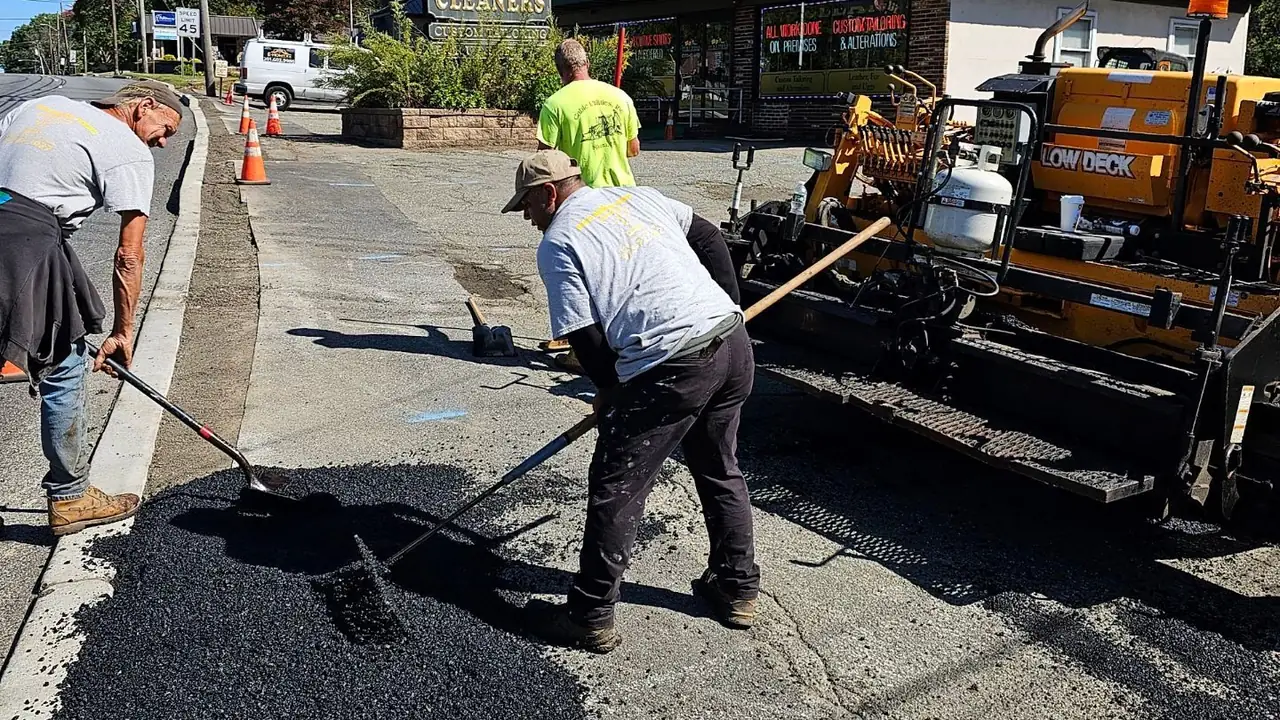
Proper crack sealing involves routing out the crack with a mechanical wire wheel to remove debris. We then inject a hot rubberized filler that expands with the weather. For pothole patching, we saw-cut a clean square, dig out the loose debris, apply a tack coat, and compact fresh mix flush into the void.
Preventative Maintenance Options
● Booking a routine asphalt sealcoating benefits application blocks moisture and UV rays.
● Staying on top of small repairs easily adds three to five years to your surface.
● Addressing minor issues prevents water from reaching the base layer.
When to Choose a Simple Fix
● Your lot is under 10 to 15 years old.
● Visible damage covers less than 25% of your total area.
● Surface cracking is narrower than a quarter-inch.
● The underlying dirt remains solid without sinking.
Staying on top of small repairs easily adds three to five years to your surface and prevents water from destroying the base layer.
The Middle Ground: The Overlay Process
What happens when your surface looks terrible, but the underlying bones of the lot are rock solid? That is exactly where asphalt resurfacing comes into play.
The Essential Milling Process
Using a heavy-duty milling machine, an asphalt paving contractor grinds away the top one to two inches of your deteriorated surface. This edge milling step is non-negotiable. Without it, you end up with elevated surfaces that create trip hazards and block proper water drainage.
The Resurfacing Application
After milling and clearing the dust, we spray an adhesive tack coat. Finally, we pave and compact a brand new layer over your existing structural base. A properly executed overlay easily lasts 10 to 15 years.
Recognizing the Red Flags
Look for these signs so that you know your asphalt driveway needs resurfacing before pulling the trigger:
● The base layer remains structurally sound.
● The surface exhibits moderate cracking or severe gray oxidation.
● Damage covers roughly 25% to 30% of the property.
● Slight rutting is present in high-traffic lanes.
Starting Fresh with a New Surface
Sometimes, a fresh start is the only financially sound choice left. An asphalt replacement is a heavy civil construction project requiring total excavation down to the raw earth.
Complete Excavation and Rebuilding
We use heavy excavators to rip out every inch of ruined material. We proof-roll the dirt to identify soft, yielding spots. If the dirt is bad, we dig it out, bring in solid aggregate stone, grade it perfectly with lasers, and compact it until it is rock solid.
Laying the New Foundation
Only after the stone base is perfect do we lay a heavy binder course, followed immediately by the smooth top surface. This intensive process guarantees 20 to 30 years of flawless performance.
Making the Tough Call
Exactly when should asphalt be replaced instead of repaired? You pull the trigger when base failure is obvious.
● You observe deep alligator cracking where chunks physically shift underfoot.
● You experience persistent standing water that refuses to drain.
● Your foundation has completely washed out or sunken.
● Overlapping patch jobs have ruined the original grading.
Cost and Value Comparison
Let’s look at how these three options actually stack up against one another in terms of time, budget, and real-world longevity.
Understanding asphalt resurfacing vs replacement cost ensures you make the right budget decision. Paying for an overlay on bad dirt is a total waste of money. The cracks from the failed foundation will immediately reflect up through the new overlay within a single winter. Always let the physical condition of the dirt dictate your budget.
Project Breakdown
● Minor Fixes: Lowest cost. Adds 3 to 5 years. Best for isolated potholes. It takes less than 1 day.
● Overlay Process: Moderate cost. Lasts 10 to 15 years. Best for widespread surface wear with an intact subgrade. It takes 1 to 3 days.
● Total Teardown: Highest cost. Lasts 20 to 30+ years. Mandatory for complete base failure and severe drainage issues. It takes 3 to 7 days.
Why Trust Black Diamond Paving & Construction LLC?
In our extensive field experience at Black Diamond Paving & Construction LLC, we tackle complex structural damage every single day. We engineer lasting solutions instead of just filling holes and walking away.
Our crews utilize advanced machines and strict application techniques. We take a distinctly customer-focused approach because we live and work in this community alongside you.
Our team is committed to transparent, honest property assessments. We will never upsell you on a total replacement if a clean overlay is genuinely the best financial solution for your business. We understand exactly how the regional climate impacts pavement, and we build our surfaces to withstand those exact extremes.
Making Your Final Decision
Your underlying base condition dictates the right solution. Do not let a minor surface issue turn into a total collapse by ignoring it for another season.
Stop guessing what is happening beneath the surface of your property. Reach out to us today to schedule a thorough pavement inspection. We will give you the straight facts and help you protect your investment for decades to come.
Frequently Asked Questions
Q. How do you choose between Asphalt Repair vs Resurfacing vs Replacement?
A. Repair simply patches up isolated holes. Resurfacing shaves off the ugly top layer and lays down fresh blacktop. Replacement means digging everything up, fixing the dirt foundation, and pouring a totally new surface.
Q. Exactly when should asphalt be replaced instead of repaired?
A. You have to rip everything out when the foundation fails. If you see massive puddles that never drain or deep cracks that look like reptile scales, a simple patch job will not hold.
Q. What are the main signs your asphalt driveway needs resurfacing?
A. The biggest giveaway is widespread fading and shallow surface cracks covering roughly a third of your pavement. As long as the dirt underneath hasn't caved in, an overlay works perfectly.
Q. How do I compare asphalt resurfacing vs replacement cost?
A. Resurfacing usually runs about half the price of a total teardown. You skip the heavy excavation and hauling fees because the original stone base stays right where it is.
Q. Can an asphalt paving contractor just pave over my broken pavement?
A. A bad one might, but a reputable crew will never do this. Paving over a collapsed foundation guarantees your new surface will crack in the exact same spots after a single winter.
Q. Will commercial parking lot resurfacing fix my bad drainage?
A. It handles minor grading tweaks, but it won't fix a sunken lot. If your property holds deep water after a storm, you need a full-depth excavation to rebuild the slope.
Q. Does basic pavement repair actually buy me more time?
A. Absolutely. Sealing cracks stops rain from washing out the dirt underneath. Catching those small holes early easily adds years to your lot's lifespan.
Q. Can alligator cracking be fixed with a quick patch?
A. Never. That scaly, interlocking cracking means the base layer is completely shot. Slapping a surface patch over it is just throwing your money into a fire.
Q. Does an overlay look as good as a brand-new lot?
A. Yes! Because the crew mills the edges and lays down fresh hot mix, the final product looks jet-black and perfectly smooth.
Q. How long do these different projects actually take?
A. Filling a few potholes takes an afternoon. Laying a new overlay might take a day or two. A full-depth replacement takes the longest—usually up to a week—because of the heavy demolition.