
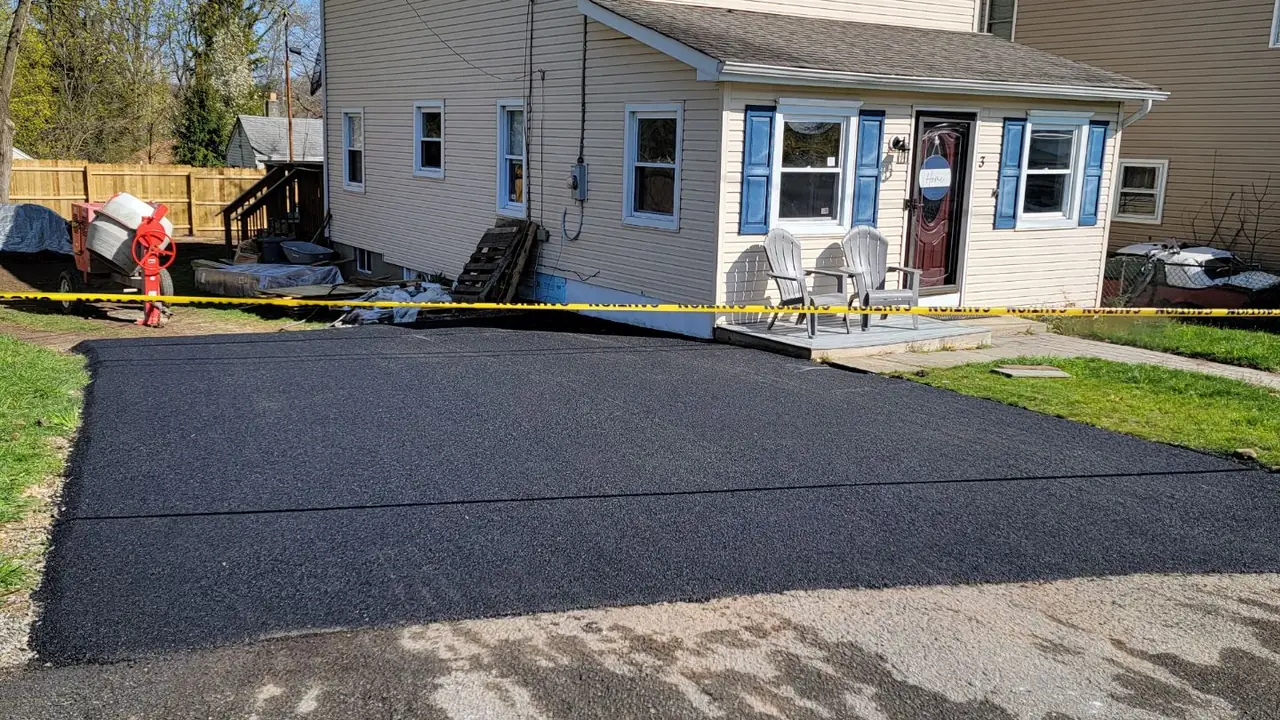
You just dropped serious money on a brand-new driveway. The blacktop looks flawless right now, but people ruin their fresh pavement all the time by pulling cars onto it way too early. Jumping the gun guarantees ugly tire grooves and repair bills you definitely don’t want.
That generic “24-hour rule” you read online? It’s basically a myth around here, especially with our wild East Coast weather. Today, we’ll walk you through exactly when it is safe to grab the keys, how the summer heat messes with the curing process, and insider tricks to harden that surface fast. Getting this right matters heavily when investing in residential asphalt paving in NJ.
How long before you can drive on new asphalt? You should wait at least 24 to 72 hours before driving or parking standard vehicles on new asphalt. Allow 3-7 days for heavy vehicles like RV’s or delivery trucks. In hot summer weather, asphalt takes longer to cool and harden, so it is highly recommended to wait closer to 72 hours to avoid tire marks and surface damage.
The Short Answer: When Is It Safe to Drive on New Asphalt?
Nobody wants to park down the street for a week, but giving the material time to set up is non-negotiable. Here is the real timeline you need to follow based on what you drive.
Standard Vehicles (Cars, SUVs, Light Trucks)
Hold off for 24 to 72 hours before pulling your daily commuter onto the pavement. The hot mix desperately needs this specific window to stiffen up. Modern vehicles are heavy. Even a standard family SUV weighs upwards of 4,000 to 5,000 pounds, and electric vehicles weigh even more due to their batteries. If you pull a heavy car onto a fresh blacktop today, the material will shift and rut under the tires. Give it three days to be completely safe.
Heavy Duty Vehicles (RVs, Delivery Trucks, Dumpsters)
Give these huge beasts 3 to 7 days, minimum. Are you expecting a huge furniture delivery or a landscaping dump truck? Call them right now and reschedule. Heavy trucks have immense point-load weight that will crush a fresh driveway. If we are stuck in a brutal July heatwave, you need to extend that wait time to a full week to stop the pavement from sinking permanently.
Cooling vs. Curing: Understanding the Asphalt Timeline
People mix up cooling and curing all the time, which leads to a lot of confusion about when a driveway is actually “done.” Let’s clear the air on how this material actually works.
The Cooling Phase (First 24-72 Hours)
Hot mix hits the dirt at over 300°F. It is literally boiling when the rollers pack it down. It has to cool off completely before it can handle the weight of a car. That rapid temperature drop over the first few days provides the initial rigidity your driveway needs so you don’t leave deep tire ruts. Once it cools to match the outside air temperature, it is generally safe for normal car traffic.
The Curing Phase (Up to 6-12 Months)
Here is what most people don’t realize: even after it’s totally safe to park on, the pavement actually stays somewhat flexible for an entire year. The complete new asphalt curing time takes several months because the liquid asphalt contains natural oils that slowly evaporate. As the sun beats down on the driveway over the first year, the surface fully oxidizes, turns a lighter shade of gray, and becomes completely rock hard.
How New Jersey Weather Affects Your Asphalt Curing Time
If you are curious how weather impacts driveway paving, you need to look at our local climate. It dictates everything we do in this industry.
Hot NJ Summers (June – August)
High humidity and blazing sun keep things soft and sticky, leaving many homeowners wondering how long asphalt takes to dry. When the air temperature is 90 degrees, the actual blacktop temperature can easily hit 140 degrees. Here is a favorite contractor secret, use the water hose trick. Spray the blacktop down lightly with cold water to cool off the pavement on those brutal afternoon heatwaves. Don’t blast it with a pressure washer; use a gentle shower spray to drop the surface temperature quickly.
Cool Spring & Fall Paving (April/May & Sept/Oct)
Crisp autumn nights help the mix set up incredibly fast. The combination of warm days for easy installation and cold nights for rapid cooling makes the shoulder seasons the best time for paving projects in our area. The driveway firms up perfectly overnight.
5 Costly Mistakes to Avoid on a Newly Paved Driveway
Keep these common blunders out of your daily routine if you want your driveway to stay smooth and last for decades.
1. Turning the Steering Wheel While Parked (Dry Steering)
Even if you strictly followed the required new asphalt driveway waiting time before pulling in, cranking your wheel while your car is parked stationary grinds the heavy rubber treads right into the soft top layer. This causes permanent “power steering tears” that look like someone took a grinder to your pavement. Always make sure your car is moving, even just creeping forward, when you turn the steering wheel.
2. Parking in the Exact Same Spot Daily
Try to mix up where you park early on in the asphalt paving timeline. Hitting the same tire marks day after day creates shallow dips where the tires rest. Eventually, those tiny dips will hold water, which leads to puddles and winter ice patches.
3. Driving on the Edges
The outside edges of a driveway are incredibly fragile because they don’t have side support yet. If you drive over them before topsoil is backfilled by your landscaper, those unsupported sides will crack and crumble away under the weight of your car.
4. Spilling Oil, Gas, or Antifreeze
Chemical spills eat right through the bitumen binder that holds the rock together. Gasoline and motor oil act as solvents. They will literally melt a hole right into your driveway, turning solid blacktop back into loose gravel. If you have a leaky older car, put a piece of cardboard under the engine for the first year.
5. Parking Bicycles, Motorcycles, or Lawnmowers
Kickstands push all the heavy vehicle’s weight onto one tiny metal point. That sharp metal point will punch right through a soft, curing surface like a hot knife through butter. Because the asphalt driveway curing time in NJ dictates that the pavement stays flexible for months due to our summer humidity, always use a small piece of scrap wood under motorcycle and bicycle kickstands to distribute the weight.
Why Trust Black Diamond Paving & Construction LLC for Your NJ Driveway?
After years of laying down high-quality driveways, our crews know this specific climate inside and out. We know firsthand how rough Northeast freeze-thaw cycles can be, dictating the exact aggregate materials and base layers we recommend.
We don’t just pour pavement, collect a check, and run. We take the time to educate our customers so the job actually lasts twenty solid years. From proper grading to heavy-duty compaction, we do it right the first time. We are fully licensed, heavily insured, and backed by real, local reviews from your actual neighbors.
Conclusion
Taking care of fresh blacktop really comes down to a little bit of patience and common sense. Wait those crucial first 72 hours before pulling your car in, avoid dry steering like the plague, and use your garden hose to cool things down on scorching hot days. Treat it right the first year, and it will serve your home for decades. Ready to plan your next home exterior project? Reach out to get a free paving estimate from our team today.
Frequently Asked Questions (FAQ)
Q. Can I walk on my new driveway right away?
A. Give it a few hours. If you step on the blacktop right after the steam clears, you will literally sink in and leave permanent shoe prints. Let the surface temperature drop completely before you let pets or kids walk across it.
Q. What if it rains exactly 24 hours after paving?
A. Don't sweat it at all. A good rain actually drops the temperature of the hot mix, helping it set up much faster. We like it when a light rain rolls through the day after an installation because it speeds up the initial cooling phase.
Q. How do I fix tire marks if I accidentally drove on it early?
A. If you just left a light scuff, let the summer sun do its thing.It will naturally fade as the surface oxidizes. For deep grooves, you can’t just paint over them. You’ll need a contractor to reheat the exact spot with a torch and tamp the material back flat.
Q. Can I park my boat or RV on new asphalt?
A. Give heavy recreational vehicles a full week minimum. When you finally back it in, slide thick pieces of plywood under the trailer tires. This spreads out that huge, concentrated load so the wheels don't dig permanent sinkholes into your fresh pavement.
Q. Will snowplows damage my new driveway?
A. Yes, they will if the driver drops a raw steel blade directly on the surface. Tell your plow driver they must use a rubber cutting edge on their plow. Also, wait until the pavement has survived its first few months before subjecting it to heavy plowing.
Q. Is it safe to put a dumpster on a new driveway?
A. Never drop a metal roll-off dumpster right on a fresh blacktop. You must lay down heavy sheets of thick plywood first. If you don't, those small metal wheels will dig holes straight down to the dirt sub-base.
Q. Does tree shade affect asphalt curing?
A. Big time. Shaded spots stay soft way longer because they don't get the direct UV rays baking the oils out. You need to be extra careful driving over those shaded sections of your property during the first few weeks.
Q. How soon can children ride bikes on it?
A. Keep the kids off for at least three days. Those skinny bicycle tires create deep ruts, and sharp metal kickstands will gouge the soft top layer like a knife cutting through butter.
Q. Why does my new driveway look gray instead of deep black?
A. That's just the sun doing its job. UV rays bake the liquid asphalt oils out over the first year. This natural oxidation turns that shiny black finish into a hard, dull gray. It means the pavement is curing exactly like it should.
Q. Can I use de-icing salt in winter?
A. Skip the cheap rock salt for the first year, or you will cause the surface to pit and flake off. Grab calcium magnesium acetate instead. It melts the ice without eating through the binder in your fresh pavement.