
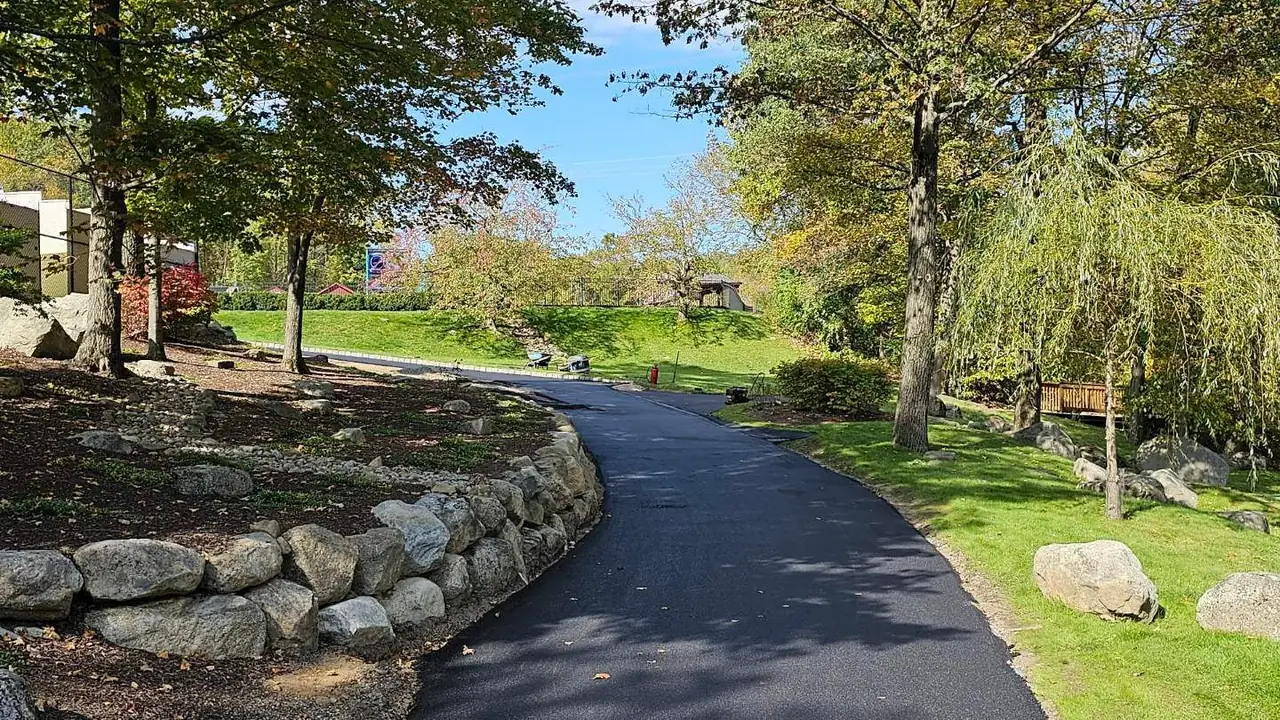
If your driveway is properly installed on a good base and maintained regularly, a typical asphalt driveway in New Jersey will usually last around fifteen to twenty years.
In milder climates, asphalt can sometimes stretch up into the twenty to thirty years range with great care, but New Jersey is tougher on pavement than many other places.
That’s why when people talk about asphalt lifespan New Jersey, they’re often working with a slightly shorter timeline than national averages. Our climate and conditions matter a lot.
Think of fifteen to twenty years as a reasonable target, and then use smart maintenance to push your driveway toward the upper end of that range (or beyond).
Why New Jersey is Rough on Asphalt
New Jersey driveways don’t live an easy life. Here’s what they’re up against:
1. Freeze thaw cycles
A freeze thaw cycle is when temperatures go above freezing, then below freezing, then back up again. Water seeps into tiny cracks, freezes and expands, then melts and shrinks. Over and over.
Northern and central New Jersey see many of these cycles each winter, and studies show that high freeze thaw counts can reduce asphalt lifespan by 30 - 40% compared to more stable climates.
That’s a big reason driveways here age faster than those in, say, the Southeast.
2. Heavy precipitation
New Jersey averages roughly 45 - 47 inches of rain a year, plus snow. When water sits on the surface or sneaks under the asphalt because of poor drainage, it weakens the base and accelerates cracking and potholes.
Water is the number one enemy of asphalt.
3. Road salt and de-icers
In winter, salt helps keep your driveway safe to walk and drive on, but it’s not exactly kind to pavement. Salt and some de-icing chemicals:
● Dry out and stiffen the asphalt surface
● Increase the number of freeze thaw cycles by melting and refreezing
● Speed up crumbling and surface raveling over time
4. Heat and UV in summer
On the flip side, our hot New Jersey summers soften asphalt and let UV rays dry it out. Over time, the deep black surface fades to gray, and the top layer becomes more brittle and prone to cracking.
5. Traffic and weight
A quiet residential driveway with two sedans has a very different life than one that regularly holds:
● Dumpsters or construction containers
More weight = More stress on the base and surface.
All of these factors are why asphalt lifespan New Jersey is different from what you might read in a generic national article.
What really determines how long your driveway lasts
Two neighbors in the same town can get very different lifespans from their driveways. Here’s why.
1. Quality of Installation
This is huge. A well installed driveway from an experienced New Jersey contractor will almost always outlast a quick and cheap job.
Important installation details include:
● Proper base prep: The stone base should be the right depth, well compacted, and free of soft spots.
● Adequate thickness: Residential driveways are often 2 - 3 inches of asphalt after compaction, heavy use driveways may need more.
● Right mix for the climate: Not all asphalt mixes are created equal. Dense, well graded mixes perform better under New Jersey’s conditions.
● Good drainage: The driveway should have a slight slope and proper transitions so water doesn’t pond.
Black Diamond Paving & Construction is based right here in Roxbury Township and specializes in asphalt paving for residential driveways and other local projects, so we design driveways specifically to handle New Jersey weather and usage.
When the foundation is right, everything that comes after is easier.
2. Drainage and grading
Even a good driveway will fail early if water has nowhere to go.
● Puddles that linger a day or more after rain
● Water flowing from your gutter downspouts straight onto the driveway
● Areas that always freeze into ice sheets in winter
Good drainage can easily add years to your driveway’s life.
3. How you use it
● Do you park the same vehicle in the same spot every single day?
● Do heavy trucks or trailers sit in the driveway for long periods?
● Is half the driveway shaded and the other half in full sun all day?
Concentrated load and uneven exposure can make some sections age faster than others. That’s why you sometimes see one area cracking while the rest still looks okay.
4. Your maintenance habits
This one is fully in your control.
Two driveways installed on the same day can end up with dramatically different lifespans depending on maintenance. With regular crack filling and sealcoating, asphalt pavements can reach the upper end of that year range.
A simple New Jersey driveway maintenance timeline
If you’re wondering, “Okay, what exactly should I be doing, and when?” — Here's a realistic schedule tailored to our area.
First 6 - 12 months after installation
● Avoid sealcoating right away. Most professionals recommend waiting about a year before the first sealcoat so the asphalt can fully cure.
● Be gentle, avoid sharp turns on hot days, parking heavy equipment, or placing trailer jacks directly on the surface.
● Keep vehicles moving rather than parking in the exact same spot all the time.
Every 1 - 3 years: sealcoating
In New Jersey, many contractors recommend:
● Crack filling and resealing every 2 - 3 years for residential driveways, depending on traffic and sun exposure.
● Protects against water, UV, and chemicals
● Slows down oxidation and surface wear
● Helps prevent small cracks from becoming big problems
● Refreshes the dark black color and curb appeal
Also, timing matters. Sealcoating needs warmer, dry weather, so the practical season in New Jersey is usually May through October.
Every spring: post-winter checkup
Each spring, take 10 - 15 minutes to walk your driveway and look for:
● New cracks (especially spreading or interconnected ones)
● Low spots that collect water
● Areas where the surface feels soft underfoot
Catching these early can save you from a full replacement years sooner than necessary.
As needed: crack filling and patching
Once water gets in, freeze thaw cycles will make those cracks wider and deeper. A simple crack filling or localized patch now is far cheaper than replacing a big section later.
Eventually, when the driveway has widespread cracking, dips, and multiple patches, it may be more cost effective to resurface or replace it, but the whole point of good maintenance is to delay that decision as long as possible.
Easy everyday habits that make your driveway last longer
You don’t need special tools or a contractor on site to make a difference. Here are simple things you can start doing right away:
1. Shovel snow carefully
● Use plastic shovels instead of metal when you can.
● Avoid “chopping” ice with sharp tools that can gouge the surface.
● Clear snow within 24 hours when possible to limit ice bonding and de-icer use.
2. Go easy on harsh de-icers
Salt is sometimes necessary, but:
● Use only as much as you need
● Sweep up excess once things melt
● Consider sand for traction in some areas instead of more salt
3. Mind heavy loads
If you need to keep a dumpster, RV, or construction equipment on the driveway:
● Use thick plywood sheets under jacks or stabilizers
● Try not to leave heavy loads parked in one spot for weeks on end
4. Protect the edges
Driveway edges are more vulnerable because they don’t have support on the sides.
● Avoid driving or parking with tires right on the very edge
● Keep grass and soil from eroding away from the sides
● Consider adding a small border of pavers, stone, or topsoil to help support the edges
5. Keep it clean
● Rinse off oil and gas spills quickly so they don’t soften the asphalt
● Sweep leaves, dirt, and debris so water doesn’t sit trapped underneath
● Keep nearby gutters and drains clear so water flows away from the pavement
None of these are complicated, but together they can add years to asphalt lifespan New Jersey driveways.
Signs your driveway is aging and what you can still do
Not every crack means you’re due for a full replacement. Here’s what common issues usually tell you:
● Hairline cracks: Normal aging. They should be sealed to prevent water intrusion, but the driveway still has plenty of life.
● Block or alligator cracking (cracks that look like reptile skin): Often a sign of base issues or long-term neglect. Repairs may involve cutting out and replacing sections.
● Potholes: Water has made its way into the base and weakened it. Localized repairs can help, but frequent potholes suggest the driveway is near the end of its life.
● Widespread fading and rough texture: The asphalt has oxidized and worn down. Sealcoating and minor repairs might give you a few more good years.
● Standing water after every rain: Drainage or settlement issues. This accelerates damage and usually calls for professional evaluation.
If you’re not sure what you’re looking at, that’s exactly the kind of situation where a local asphalt pro earns their keep.
Why working with a local New Jersey paving contractor matters
New Jersey is its own animal when it comes to asphalt. You want a contractor who:
● Works with our climate and codes every day
● Knows how local soils behave when saturated
● Chooses asphalt mixes and base designs that stand up to our winters and summers
Black Diamond Paving & Construction is a full-service contractor based in Roxbury Township, NJ. We specialize in asphalt paving for residential driveways, parking lots, and other projects and focus on doing the job right the first time from base prep to final surface.
Because we live and work here, we see firsthand how New Jersey driveways age and what actually works to extend their life.
The bottom line: what to remember about asphalt lifespan in New Jersey
If you only take a few points from this:
● Expect 15 - 20 years from a well installed, regularly maintained asphalt driveway in New Jersey, sometimes more with excellent care.
● Our climate (freeze thaw, rain, salt, heat) naturally shortens asphalt lifespan compared to gentler regions.
● Quality installation and good drainage are the foundation of a long lasting driveway.
● Routine maintenance, especially crack filling and sealcoating every few years can add many years of use.
● Simple habits like careful snow removal, managing heavy loads, and keeping the surface clean really do make a difference.
If you’re looking at your driveway and wondering whether it needs a little TLC or a full makeover, reach out to the team at Black Diamond Paving in New Jersey. We can walk your driveway with you, explain what we see in plain language, and give you honest, local advice on how to make your asphalt last as long as possible.